Check on Your Tyres
Chapter 8 · Manual page 336
USING DEFECTIVE TYRES IS DANGEROUS! DO NOT drive if any tyre is damaged, is excessively worn, or is inflated to an improper pressure.
When replacing tyres it is strongly recommended that the new tyres are of the same specification as the original tyres. DO NOT replace the tyres with tyres of any other type. Alternative tyres, of a different specification, may adversely affect the vehicle’s driving characteristics and safety. In order to maintain driving characteristics and safety , it is suggested that you consult an Authorised Repairer.
Always drive with consideration for the condition of the tyres, and regularly inspect the tread and side walls for any sign of distortion (bulges), cuts or wear.
Prevent tyres from coming into contact with oil, grease and fuel.
Tyre Pressure
Before a long distance journey, always check your tyre pressures.
Tyre pressures should be checked monthly when the tyres are cold.
If it is necessary to check the tyres when they are warm, you should expect the pressures to have increased by 3040 kPa (i.e. 0.30.4 bar). In these circumstances, NEVER let air out of the tyres in order to match the recommended pressures (cold) in the technical data.
Valves Keep the valve caps firmly secured - they prevent dirt from entering the valve. Check the valve for leaks (listen for a tell-tale hissing) when you check the tyre pressure. Your vehicle is equipped with tyres which may not leak if penetrated by a sharp object, provided the object remains in the tyre. If you are aware of this occurring, reduce speed immediately and drive with caution until repairs can be undertaken.
If the sidewall of the tyre is damaged or distorted, replace the tyre immediately, do not attempt a repair.
Tyre Wear Indicators The tyres fitted as original equipment have 1.6 mm-high wear indicators at the bottom of the tread, vertical with the wheel rolling direction and evenly distributed around the circumference. A mark on the tyre sidewall such as capital letters TWI or triangular symbol shows the location of wear indicator.
When the tread has been worn down to 1.6 mm or below, the indicators will come to the surface of the tread pattern, producing the effect of a continuous band of rubber across the width of the tyre.
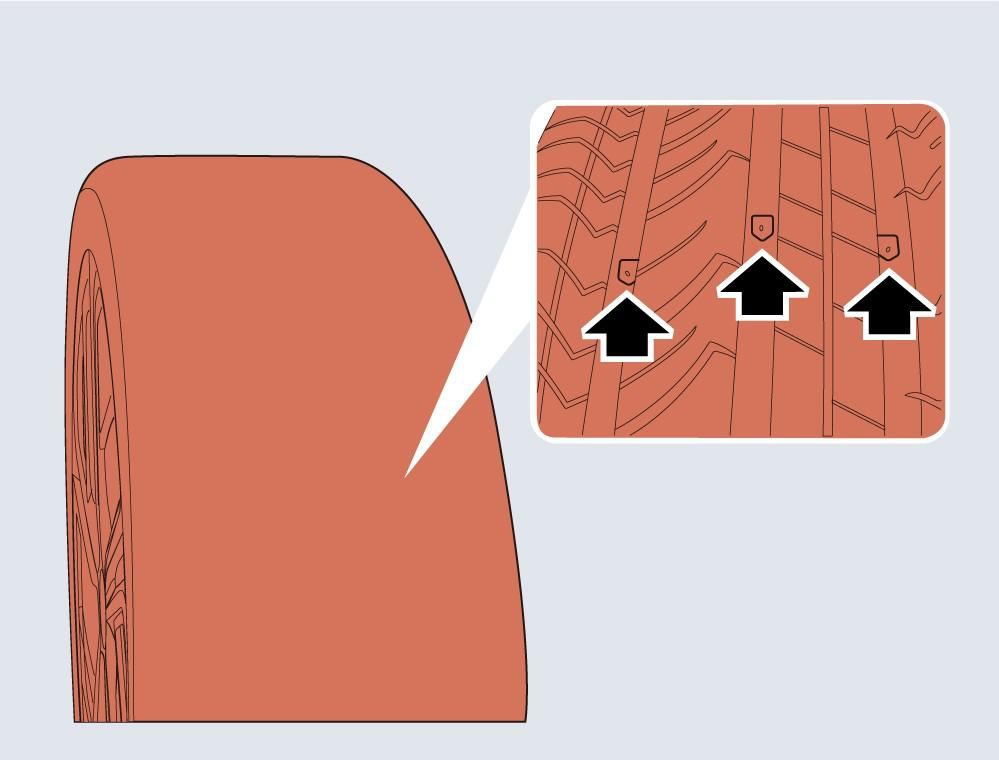
The tyre must be replaced when it is worn to reveal the wear indicator, worn tyres can cause accidents.