Correct Routing of the Seat Belts
Chapter 4 · Manual page 168
Ensure the seat belt is correctly positioned on the body, never crosses the neck or abdomen, and never passes the seat belt behind the back or under the arms.
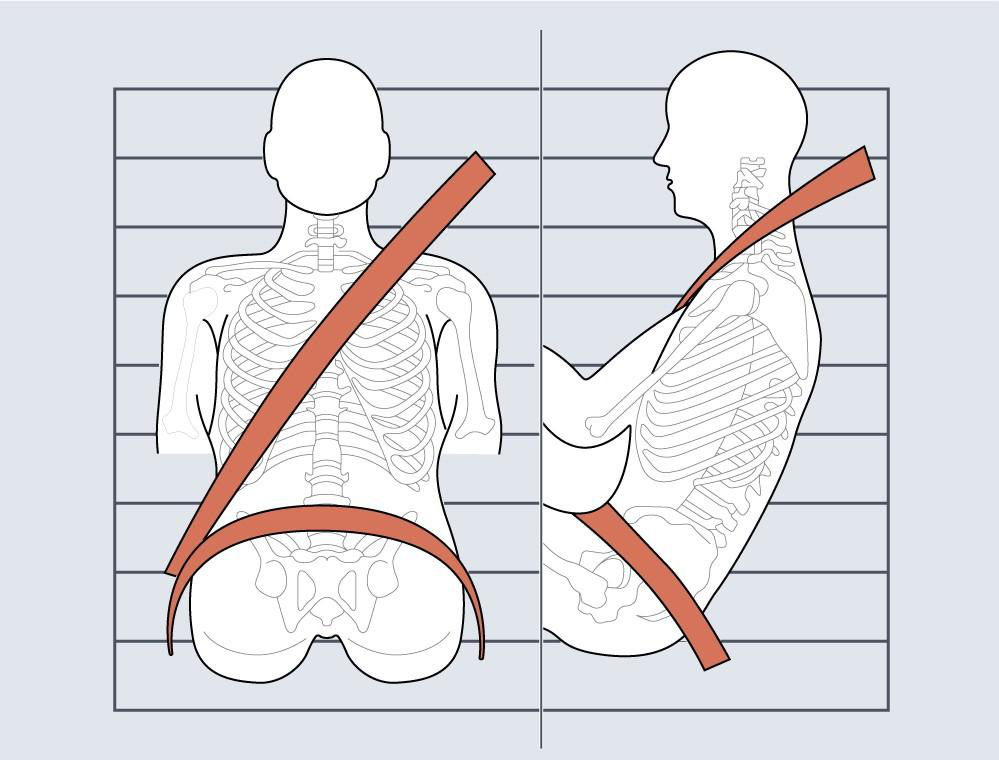 When wearing seat belts, the lap belt section should be positioned as low as possible across your hips and just in contact with your thighs (never cross the abdomen), so that in a collision accident, the lap belt can apply force to the firm hips, reduce the possibility of the body moving under the lap belt, and maximise the protection for passengers against injury.
The shoulder belt should cross the middle of the shoulder and the chest. In the event of emergency braking or collision, the shoulder belt will be locked. Never make the belt cross your neck or arms, or cross under your arms or behind your back.
To ensure that the seat belts always provide maximum protection, ensure the belt is flat, not loose and contacts the body. Adjust seat belt to ensure it is not loose.
Seat Belt use During Pregnancy
When wearing seat belts, the lap belt section should be positioned as low as possible across your hips and just in contact with your thighs (never cross the abdomen), so that in a collision accident, the lap belt can apply force to the firm hips, reduce the possibility of the body moving under the lap belt, and maximise the protection for passengers against injury.
The shoulder belt should cross the middle of the shoulder and the chest. In the event of emergency braking or collision, the shoulder belt will be locked. Never make the belt cross your neck or arms, or cross under your arms or behind your back.
To ensure that the seat belts always provide maximum protection, ensure the belt is flat, not loose and contacts the body. Adjust seat belt to ensure it is not loose.
Seat Belt use During Pregnancy
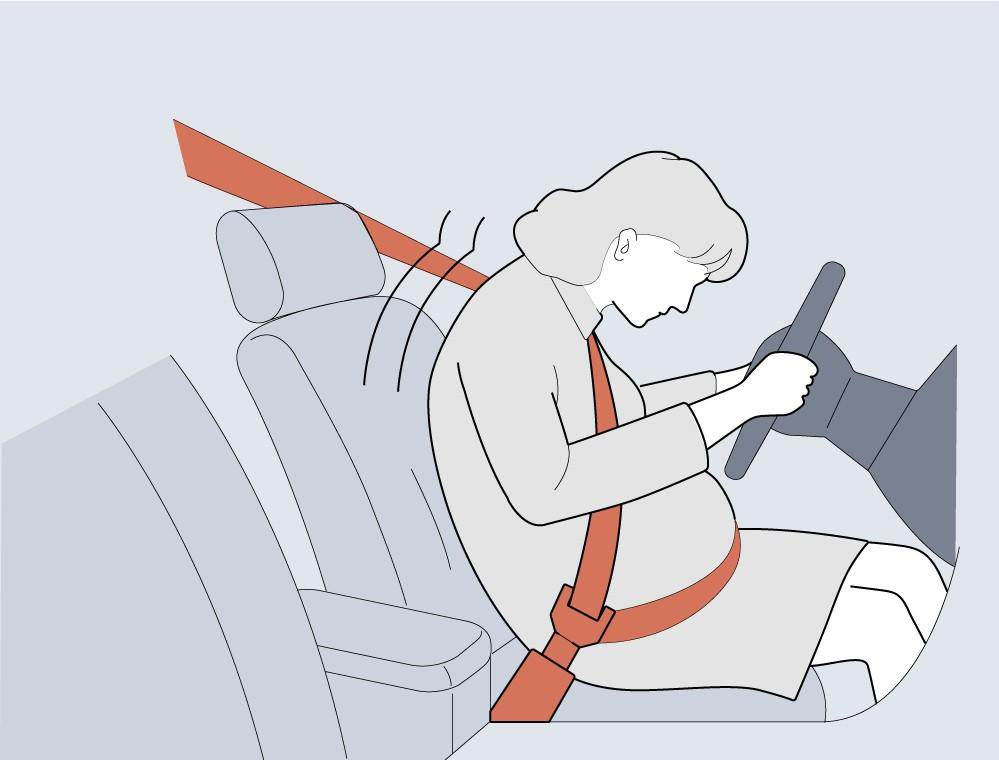 Wearing correctly positioned seat belts will provide protection for both mother and unborn child in the event of a collision or emergency braking. Like all passengers, a pregnant woman may suffer from more serious injury in collision accidents or sudden stop if she does not wear the seat belt correctly.
During the whole pregnancy, a pregnant woman must wear the lap-shoulder seat belt correctly. The diagonal section of the seat belt should pass across the chest as normal. The lap section of the belt should be as low as possible across below the belly, and snug on the hip bones. The seat belt must be flat so as not to cause pressure on the lower body of the pregnant woman.
Please consult your physician for further details.
Seat Belt Use for Disabilities It is a legal requirement that all occupants wear seat belts,this include people with disabilities.
People with disabilities must also wear seat belts correctly.
Please consult your physician for further details.
Wearing correctly positioned seat belts will provide protection for both mother and unborn child in the event of a collision or emergency braking. Like all passengers, a pregnant woman may suffer from more serious injury in collision accidents or sudden stop if she does not wear the seat belt correctly.
During the whole pregnancy, a pregnant woman must wear the lap-shoulder seat belt correctly. The diagonal section of the seat belt should pass across the chest as normal. The lap section of the belt should be as low as possible across below the belly, and snug on the hip bones. The seat belt must be flat so as not to cause pressure on the lower body of the pregnant woman.
Please consult your physician for further details.
Seat Belt Use for Disabilities It is a legal requirement that all occupants wear seat belts,this include people with disabilities.
People with disabilities must also wear seat belts correctly.
Please consult your physician for further details.